




8 mins read
By John Thwaites, Founder, GoReinvent
In 2024/25, nearly one million pension plans were accessed for the first time. Crucially, over 40% were under 60 and many were still working showing this isn’t a retirement trend, but a shift in how people over 50 manage work, income, and financial transitions.
Crucially, over 40% of those withdrawals came from people under sixty and many were still working.
This isn’t a traditional retirement story.
Instead, it reflects a deeper shift in how people over 50 are navigating work, income, and financial security in the UK. The assumption that pensions are only accessed at the end of a long, stable career no longer holds.
What’s happening is more complex and far more relevant if you’re approaching your fifties or already there.
To understand it properly, three pieces need to be considered together: pension withdrawal data, labour market trends, and the growing number of people building income outside traditional employment.
Put those three pieces together and something becomes visible that most financial commentary misses entirely.
It isn’t a crisis, it’s a reorientation.
The Pension System Was Built for a Different World
The modern pension was designed around a set of assumptions that made sense fifty years ago.
You joined an employer in your twenties; you stayed, or moved occasionally. And you built up savings steadily across a long, relatively stable career. Then, somewhere between sixty and sixty-five, you retired and began drawing down what you had accumulated.
That model worked when careers followed that shape.
Many no longer do.
Companies restructure more frequently than they once did. Roles that existed a decade ago no longer exist in the same form. Hiring systems, many now automated before a human sees a single application, treat older candidates differently than they once did. The skills and judgement built over thirty years are genuinely valuable, but the organisations designed to deploy them are changing faster than the people inside them.
It hasn’t kept pace with any of this.
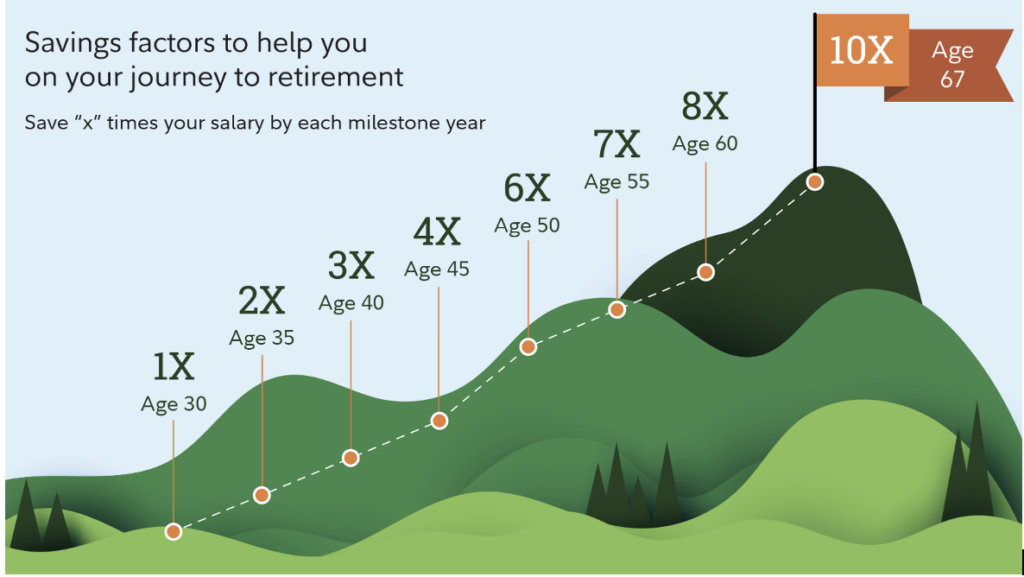
The median pension pot for someone aged 55 to 64 in Britain today is approximately £137,800.
That sounds like a meaningful sum. In isolation, it is.
But retirement specialists estimate that a moderate retirement lifestyle not lavish, not austere requires between £330,000 and £490,000 in pension savings, alongside the full State Pension. The Pensions and Lifetime Savings Association puts the annual income needed for a comfortable single-person retirement at £43,900.
The shortfall is significant and it isn’t the saver’s fault. The contribution rates people were told to pay were never high enough to produce a secure retirement. The system set the bar low and called it progress.
Auto-enrolment, introduced in 2012, brought 21.7 million people into workplace pension saving. Total workplace pension savings now stand at £149.7 billion annually. On paper this looks like progress. But the contribution floors, currently 8 percent of qualifying earnings, were set to get people saving, not to guarantee them a comfortable retirement. Most financial planners consider 12 to 15 percent the minimum required for a genuinely secure outcome.
The average UK adult estimates their total pension wealth at £50,923.
The number required for a moderate retirement is six times that.
This isn’t a crisis of individual behaviour. More so, a crisis of a system design meeting a changed world. And it’s the backdrop against which nearly one million pension plans were accessed last year, many of them by people who had done everything right and still found the numbers didn’t add up.

Why Are People Accessing Their Pensions Before Retirement in the UK?
The pension withdrawal figures make more sense when placed alongside what’s happening in the labour market.
What the FCA Data Actually Shows
Around 3.6 million people aged 50 to 64 are currently economically inactive in the UK. That’s a large number. But what matters more than the total is how many of those exits were chosen.
Research consistently shows that nearly half of all job departures among people aged 50 to State Pension Age are involuntary: redundancy, organisational restructuring, health issues, industry decline. The person who expected to work until sixty-five and found themselves out of work at fifty-eight did not make a lifestyle choice. Something happened to them.
Who Is Behind the Numbers
The evidence points to one clear answer about what happens next. Among those who left work between fifty and State Pension Age, 49 percent used their private pension to fund the period after leaving. Among those aged sixty and above, that figure rises to 66 percent.
Pension access is rarely careless. In many cases, it becomes the only financial bridge available when the career path ends sooner than expected.
The Hidden Workforce Exit: Why Over-50s Are Leaving Work Earlier Than They Planned
Redundancy, Burnout, and the Involuntary Exit
Older workers are 17 percent more likely to face redundancy than their younger colleagues.
Those who are made redundant over fifty save an average of £29,000 less for retirement as a direct consequence.
The burnout picture is equally significant. Among people who leave work in their fifties, 38 percent cite stress or redundancy as the primary cause. A further 33 percent describe not feeling supported or wanting a different kind of working life. Among those aged 50 to 54 specifically, stress is the leading reason for leaving more common in that age group than in those approaching sixty-five, who have often made more deliberate peace with the transition.
How Pension Savings Are Affected When Careers Are Cut Short
The industries where this is most pronounced are not the ones you might expect.
The largest rises in over-50 economic inactivity, since the pandemic, have been in wholesale and retail, up 40 percent; transport and storage, up 30 percent; and manufacturing, up 25 percent. These aren’t sectors populated primarily by senior executives. They are sectors populated by people who built careers in practical, operational, and technical work and found themselves without a clear path forward when those careers were disrupted.
This group saves an average of £29,000 less for retirement. That figure represents the gap between what a career disruption at this stage costs and what the individual can realistically recover.
But the pension data only shows half the story.

The Rise of the Midlife Entrepreneur: What 2.1 Million Self-Employed Britons Over 50 Tell Us
Here’s the part of the story that rarely appears in pension commentary.
About 2.1 million people aged over fifty are now self-employed in the UK. That figure represents almost half of the entire self-employed workforce. Nearly one million of them are aged sixty or older.
This isn’t a rounding error or a statistical quirk. It is one of the most significant shifts in British working life over the past decade. Self-employment among the over-fifties has grown steadily through redundancy cycles, through the gig economy expansion, through the pandemic, and through the years since. Every year, between 80,000 and 120,000 people aged over fifty start a new business in the UK.
Many of them aren’t doing what they used to do inside an organisation. They’re doing something different with what they already know.
A former music teacher does not start a school. He builds an online community for choir leaders, teaching what he spent thirty years learning in classrooms. His membership model now generates £60,000 a month.
A mortgage broker, burned out after seven years running her own practice, does not start another brokerage. She writes one detailed article about a financial topic she understands better than most people. That article becomes an affiliate income stream. She generates around $300,000 in her first year.
A railway industry consultant, recognising that the traditional work is becoming harder to sustain long term, does not wait for it to collapse. Within a year he builds a second income online, running alongside his consultancy rather than replacing it.
A personal trainer who loses her job when her family relocates to the Slovenian coast does not look for a new gym to work in. She teaches people online how to manage lower back pain. Her membership community generates around €10,000 a month. She homeschools her children and works from home.
These aren’t exceptional people with unusual advantages. They’re people who looked at what they had actually built the knowledge, the credibility, the understanding of specific problems that other people needed solved and found a way to deploy it differently.
Three Movements That Appear in Every Successful Transition
The pattern that appears across all of these stories follows three movements.
First, something disrupts the existing path. Redundancy. Burnout. A health event. An industry change. The disruption is rarely chosen, but it creates a forced pause.
Second, a period of reassessment. The question changes from “how do I find another job like the last one?” to “what do I actually know that other people need?” This is where most people either stall or begin to move. The ones who move are often those who stop measuring their value by their job title and start measuring it by their accumulated expertise.
Third, redeployment. The experience moves into a new context. Not a new identity. Not an abandonment of the career that came before. A different channel for the same knowledge and credibility.
This is what reinvention actually looks like for most people who do it successfully. Not a dramatic pivot. Not starting from zero. A redirection of what was already there.
When the Pension Becomes a Bridge: How Pension Freedoms Changed the Calculation
The Pension Freedoms legislation of 2015 changed the financial calculation for career transitions in ways that are still not fully understood by the people most affected by them.
Before 2015, accessing pension savings before retirement required navigating a complex set of restrictions. After 2015, people could access defined contribution pensions from age fifty-five taking a 25 percent tax-free lump sum, moving into drawdown, or doing both with a degree of flexibility that had not previously existed.
For people in the middle of a career transition, this created a new kind of resource.
Research conducted in the period after the reforms found that around 500,000 people over fifty were considering using pension access to fund a business start. Among those who went on to start businesses, approximately half used their pension lump sum as part of their start-up capital. The average pension amount accessed for business purposes was around £70,000 a figure significantly above the 25 percent tax-free entitlement, which means many were drawing on taxable funds as well.
It was no longer simply a retirement income. For a growing number of people, it had become the financial bridge between one career and the next.
A pension used as a bridge looks very different from a pension raided in desperation. It is a planned deployment of accumulated assets to fund a transition that is expected to generate new income. The person is not spending their retirement money. They are investing their career capital financial and experiential in a deliberate next stage.
That said, the bridge only works if it’s used carefully. And the evidence suggests that a growing number aren’t using it carefully enough.

The Pension Traps That Could Cost You Dearly: MPAA, Depletion Risk, and Emergency Tax
The surge in pension access has been accompanied by a significant and largely invisible problem.
Drawdown Depletion: The Risk in the Numbers
Forty-five percent of all pension pots currently in drawdown are being withdrawn at rates of 8 percent or above annually.
This is the highest level recorded since Pension Freedoms were introduced. Most financial planners consider 4 percent a more sustainable long-term withdrawal rate. At 8 percent, a median pension pot of £80,000 the typical figure for someone aged 45 to 54 would be fully exhausted in approximately thirteen years. For someone who first accesses their pension at fifty-five, that means running out of pension income in their late sixties, well before average life expectancy.
This is the depletion risk. It’s real, it’s measurable, and most people walking into it have no idea it exists.
The tax trap is equally serious. Large pension withdrawals are subject to income tax in the year they are taken. A single withdrawal of £50,000 from a pension, added to other income in the same tax year, can push someone into a higher tax bracket for amounts they may never have expected to pay 40 percent on. HMRC has specifically warned that people who took large lump sums in response to Budget rumours in late 2024 and then attempted to return them are facing tax charges of between 55 and 70 percent on those amounts, with no mechanism for reversal.
The Money Purchase Annual Allowance: What 80% of People Over 50 Don’t Know
But the most consequential trap, and the least known, is the Money Purchase Annual Allowance.
Once a person starts taking taxable income from a pension drawdown arrangement, a rule called the Money Purchase Annual Allowance reduces the amount they can contribute to any pension in future from £60,000 per year to £10,000 per year. The ability to carry forward unused allowance from previous years is also lost, permanently.
The rule isn’t triggered by taking the 25 percent tax-free lump sum alone. It’s triggered by taking taxable income from a drawdown fund. The distinction is important and poorly understood.
Research published in 2024 found that 80 percent of people over fifty have never heard of the Money Purchase Annual Allowance. Only 5 percent are fully familiar with it and understand when it’s triggered.
For someone who accesses their pension at fifty-eight to fund a consulting business, then finds the business generating profit and wants to rebuild their pension savings in their early sixties; in practic, it means their ability to do so has been permanently reduced to £10,000 a year. The bridge they used to cross into their new career has removed their ability to rebuild the structure on the other side.
Knowledge of this rule before accessing a pension is not optional. It’s the difference between a planned transition and an expensive, irreversible mistake.
Only about 30 percent of people took regulated financial advice before accessing their pension last year. Most made these decisions alone, without the information they needed.
The Gender Pension Gap: What the £113,000 Difference Means in Practice
The pension story doesn’t affect everyone equally.
The gender pension gap in Britain has widened to £113,000, according to research published in 2025. The median private pension pot at retirement stands at approximately £173,000 for women and £286,000 for men a gap of 32 percent that is growing, not closing. At the current rate of change, researchers estimate it will take another twenty years before the gap closes.
Among women aged 55 to 59, the gap is even more pronounced. Women in that age group hold median pension savings of £81,000 against £156,000 for men a difference of 48 percent at precisely the point when pension access decisions are being made.
The causes are structural. Women are twelve times more likely than men to take a career break for childcare. A five-year career break taken at thirty-five reduces a woman’s final pension pot by an estimated £69,380. Many of the women who took those breaks never considered the long-term retirement consequence at the time research suggests 56 percent made that decision without assessing the pension impact.
Divorce compounds the problem. One in three divorces in the UK now occurs after the age of fifty. Only 7 percent of divorcing couples seek financial advice. Thirty-four percent of divorcing women make no claim on their partner’s pension, in many cases the largest financial asset in the marriage.
The gender pension gap is not a personal finance failure. It is the accumulated financial consequence of structural inequalities in how careers, caring, and partnerships have been organised over decades. Understanding the mechanism is the first step toward addressing it.

What All of This Adds Up To
Place these pieces alongside each other and a single coherent picture emerges.
The pension system was designed for a world of stable careers and predictable retirements. That world has changed. Many people are leaving work earlier than they planned, often involuntarily. Their pension savings are smaller than they expected. The pension access rules introduced in 2015 have given them flexibility that did not previously exist but also exposed them to financial traps that most of them don’t know about.
At the same time, something else is happening.
A growing number of people are finding that the disruption however painful the circumstances that created it has pushed them toward a different kind of working life. One built around expertise rather than employment. Around problems they understand deeply and people who trust their judgement. Around income they generate rather than income they are given.
It’s not a small or marginal trend. It’s happening at scale. 2.1 million people over fifty are self-employed. Nearly one million are over sixty. The numbers grow every year.
Those making this transition successfully share a common insight.
The job title was never the asset. The experience was.
It was the knowledge, the credibility, and the relationships accumulated over the career that came before.
That asset does not disappear when the employment does.
It becomes available, often for the first time, to be deployed on your own terms.
And exploring whether it can generate independent income does not require leaving your job, announcing a new career, or betting your pension on an idea. It requires finding out whether what you know has demand before you commit anything significant to it. The cost of exploring is a weekend and £50. The cost of not exploring is making a pension access decision without ever knowing what your options actually were.
Frequently Asked Questions: Pension Access and Work After 50
What happens to my pension if I am made redundant over 50?
Your pension pot remains yours, redundancy doesn’t reduce it and your employer cannot take it back. However, redundancy at this stage significantly affects your ability to build it further.
Research shows people made redundant over 50 save an average of £29,000 less for retirement as a direct result of career disruption. If you access your pension to fund the period after redundancy, this may trigger the Money Purchase Annual Allowance, permanently reducing your future pension contribution limit from £60,000 to £10,000 per year.
Getting regulated financial advice before touching your pension at this point is strongly recommended.
When can I access my pension in the UK?
You can currently access a defined contribution pension from age 55.
This is rising to 57 in April 2028 for most people, if you were born after 5 April 1971, the higher age will apply to you. Some people have a Protected Pension Age that allows earlier access, typically those who worked in certain professions before 2006. You can take up to 25 percent of your pension as a tax-free lump sum. Any amount above that is taxable income in the year you withdraw it.
What is the Money Purchase Annual Allowance and when does it apply?
The Money Purchase Annual Allowance (MPAA) is a rule that permanently reduces the amount you can contribute to any pension from £60,000 per year to £10,000 per year. It’s triggered the moment you take taxable income from a pension drawdown arrangement not when you take the 25 percent tax-free lump sum alone.
Once triggered it cannot be reversed, and the ability to carry forward unused allowance from previous years is permanently lost. Research published in 2024 found 80 percent of people over 50 have never heard of this rule. For anyone still earning or planning to rebuild pension savings, triggering it accidentally is one of the most costly pension mistakes possible.
Will I have to pay tax on my pension withdrawal?
Yes, on most of it. You can take up to 25 percent of your pension pot tax-free (subject to a lifetime limit of £268,275 across all your pensions).
Everything above that 25 percent is added to your other income for that tax year and taxed at your marginal income tax rate 20, 40, or 45 percent depending on your total income. Taking a large lump sum in a single tax year can push you into a higher rate bracket you might not otherwise reach. Spreading withdrawals across multiple tax years, where possible, is a common strategy for reducing the overall tax burden.
Can I access my pension and still work?
Yes. There is no requirement to stop working before accessing a defined contribution pension.
In 2024/25, around 23 percent of people who accessed their pension for the first time were still in paid employment. However, taking taxable income from a pension drawdown arrangement while working will trigger the Money Purchase Annual Allowance, which permanently limits future pension contributions to £10,000 per year. If you are still working and considering pension access, regulated financial advice is strongly recommended before making any drawdown decision.
Is it a good idea to use a pension lump sum to start a business?
Using pension access to fund a business start has become more common since Pension Freedoms were introduced in 2015.
Around half of people who started businesses after that date used their pension lump sum as part of their start-up capital. Whether it is appropriate depends on your personal circumstances, tax position, business plan, and whether triggering the MPAA matters to your longer-term retirement outlook. The tax-free lump sum up to 25 percent does not trigger the MPAA. Drawing taxable income from drawdown does. A regulated financial adviser should be consulted before any pension access decision for this purpose.
How much do I need in my pension for a comfortable retirement in the UK?
The Pensions and Lifetime Savings Association estimates that a comfortable single-person retirement in the UK requires an annual income of £43,900.
To generate that through a pension, most financial planners estimate a total pot of between £330,000 and £490,000 is needed alongside a full State Pension. The median pension pot for someone aged 55 to 64 is currently approximately £137,800 significantly below this threshold. The gap between what most people have and what a secure retirement requires is structural, not a result of individual failure.
Why is the gender pension gap so large in the UK?
The gender pension gap stands at approximately £113,000, with women holding median pension savings of £173,000 compared to £286,000 for men at retirement.
The causes are structural: women are twelve times more likely to take career breaks for childcare, a five-year break at age 35 costs an estimated £69,380 in final pension savings, and 34 percent of divorcing women make no claim on a partner’s pension which is often the largest financial asset in the marriage. The gap is not a personal finance failure. It’s the accumulated consequence of how careers, caring, and partnerships have been structured over decades.
What are the alternatives to employment for people over 50 in the UK?
Around 2.1 million people aged over 50 are self-employed in the UK nearly half the entire self-employed workforce.
The most common paths involve redeploying existing expertise rather than starting something entirely new: consulting, fractional leadership roles, coaching, teaching, affiliate and partnership income, productised services, and combinations of several income streams. Most successful transitions are not dramatic career pivots. They are redirections of existing knowledge and credibility into a different context often one that can be tested and validated before any significant financial commitment is made.

The Structured Way Forward
Understanding the landscape is the beginning, not the end.
Many people who reach this point know that something different is possible. They can see, from the evidence and from the stories in this article, that experience can be turned into independent income. They understand, at least in outline, what the pension risks are and why taking decisions carefully matters.
What most of them have never had is a framework for testing whether an idea actually works before spending months building something, before investing significant money, and before telling anyone what they are doing.
That’s the problem Mission Map was built to solve.
It’s a three-phase framework developed by Stuart Ross, who has helped more than 7,000 people test whether their knowledge and experience can become independent income before committing to anything larger.
The sequence is: Prepare, Launch, Grow.
Phase one: Prepare is the most important. This is where you identify one specific problem your experience could help solve, for one specific type of person, and test whether people will actually pay for that solution. The test typically costs between £50 and £100 in small ad spend and takes one to two weeks. You are not building a business. You are finding out whether an idea has legs before you commit anything significant to it.
If people buy, you have proof. If they do not, you have spent the equivalent of a dinner out and learned something valuable in days rather than months.
Phase two: Launch is where you build a simple online system around what has already been proven. A brand, an email list, a way for people to find you and buy from you. One offer, structured well, typically becomes the foundation for several income streams over time.
Phase three: Grow is where you scale what is already working.
The Mission Map Fast Start Bundle costs £20. It includes four on-demand workshops, an AI-powered offer idea tool, a one-to-one Vision Call with an experienced adviser to map your first thirty days, and a 124-page reference book. There’s a full refund available within thirty days if it’s not useful to you.
Most people who use it are still employed when they start. Many test their first idea within weeks. None of it requires a public profile, an existing audience, or advanced technical skills.
The pension data, the labour market data, and the proof stories in this article all point in the same direction.
The traditional path is less reliable than it was. Experience still has value. The question is not whether to think about what comes next. It’s how to do that thinking clearly, at low cost, and on your own terms.
See the Mission Map overview →
If you would rather ask questions before going further, you are welcome to join the free Tuesday Clarity Call. Details are on the Mission Map page.
Key Takeaways
- £70.9 billion was withdrawn from UK pensions in 2024/25 the largest annual withdrawal on record
- Nearly one million pension plans were accessed for the first time in a single year
- More than four in ten withdrawals were made by people under sixty; 23 percent were still working
- The median pension pot for someone aged 55-64 is approximately £137,800 against an estimated £330,000-£490,000 needed for a moderate retirement
- Around 3.6 million people aged 50–64 are economically inactive; nearly half of those exits were involuntary
- People made redundant over 50 save an average of £29,000 less for retirement as a direct result
- 2.1 million people aged over 50 are self-employed in the UK nearly half the entire self-employed workforce
- The Money Purchase Annual Allowance reduces future pension contributions from £60,000 to £10,000 per year once triggered and 80 percent of people over 50 have never heard of it
- The gender pension gap stands at £113,000 women hold a median £173,000 versus men’s £286,000 at retirement
- At current rates, the gender pension gap will take another twenty years to close.
Appendix: Sources and References
All statistics and claims in this article are drawn from primary sources. Where secondary sources are cited, the underlying primary research is identified.
Pension withdrawal data Financial Conduct Authority, Retirement Income Market Data 2024/25. https://www.fca.org.uk/data/retirement-income-market-data-2024-25
FCA Interactive Analysis tool, Retirement Income Market Data 2024/25. https://www.fca.org.uk/data/retirement-income-market-data-2024-25/interactive-analysis
Pension adequacy Pensions and Lifetime Savings Association, Retirement Living Standards 2024. Source of the £43,900 comfortable retirement income figure.
ONS / DWP, Analysis of Future Pension Incomes 2025. https://www.gov.uk/government/statistics/analysis-of-future-pension-incomes-2025
St James’s Place, Pension Wealth Survey 2025. Source of the £50,923 average estimated pension wealth figure.
Auto-enrolment The Pensions Regulator, Automatic Enrolment Commentary and Analysis 2024. Source of the 21.7 million figure and £149.7bn total workplace pension savings.
FCA qualitative research on withdrawal motivations Financial Conduct Authority, Pension Freedoms: A Qualitative Research Study of Individuals’ Decumulation Journeys. https://www.gov.uk/government/publications/pension-freedoms-a-qualitative-research-study-of-individuals-decumulation-journeys
Cost of living and pension access Financial Conduct Authority, Financial Lives: Cost of Living Recontact Survey January 2024. https://www.fca.org.uk/publication/financial-lives/financial-lives-cost-of-living-jan-2024-recontact-survey-findings.pdf
HMRC tax warning on returned lump sums The Private Office, HMRC Responds to Surge in Pension Withdrawals, 2025. https://www.theprivateoffice.com/news/hmrc-responds-surge-pension-withdrawals
Labour market and over-50 exits GOV.UK, Economic Labour Market Status of Individuals Aged 50 and Over: Trends Over Time, September 2025. https://www.gov.uk/government/statistics/economic-labour-market-status-of-individuals-aged-50-and-over-trends-over-time-september-2025
Involvement and Participation Association / ILC, A Million Over-50-Year-Olds Remain Involuntarily Workless. https://ilcuk.org.uk/a-million-over-50-year-olds-remain-involuntarily-workless/
Legal and General, The Missing Midlife Workers: Redundancy Pushes Over-50s Out of the Workforce. https://group.legalandgeneral.com/en/newsroom/press-releases/the-missing-midlife-workers-redundancy-pushes-over-50s-out-of-the-workforce-with-20-000-leaving-year-on-year
ONS, Reasons for Workers Aged Over 50 Years Leaving Employment Since the Start of the Coronavirus Pandemic, Wave 2. https://www.ons.gov.uk/employmentandlabourmarket/peopleinwork/employmentandemployeetypes/articles/reasonsforworkersagedover50yearsleavingemploymentsincethestartofthecoronaviruspandemic/wave2
Pension access to fund time out of work ONS data cited via GOV.UK labour market statistics, September 2025.
Self-employment over 50 IPSE, The Self-Employed Landscape 2023: More Than One Million Over-50s Work for Themselves. https://www.ipse.co.uk/articles/more-than-one-million-over-50s-work-for-themselves
ONS Labour Force Survey, Q3 2023. Source of the 2.1 million self-employed aged 50+ figure and 49 percent workforce share.
Pension access for business formation Clifton Asset Management / AXA Wealth, study published 2015. Reported via: Corporate Adviser, Entrepreneurs Cash In £400m of Pensions to Fund New Ventures. https://corporate-adviser.com/entrepreneurs-cash-in-400m-of-pensions-to-fund-new-ventures/
PensionBee, Using Your Pension to Start a Business in Retirement. https://www.pensionbee.com/uk/blog/using-your-pension-to-start-a-business-in-retirement
Note: The business formation data cited in this article originates from 2015 research conducted immediately after Pension Freedoms were introduced. No equivalent post-2020 primary dataset exists that directly links individual pension withdrawals to business formation. The figures are used as directional evidence only.
Drawdown withdrawal rates Broadstone analysis of FCA data, October 2025. Reported via: MoneyWeek, Pensioners Cash Out, October 2025. https://moneyweek.com/personal-finance/pensions/pensioners-cash-out
Advice take-up Financial Conduct Authority, Retirement Income Market Data 2024/25. Source of the 30.6 percent regulated advice figure.
Money Purchase Annual Allowance awareness Standard Life / Opinium Research, August 2024. Sample: 2,000 adults aged 50+, nationally representative. Standard Life press release, MPAA and Lifetime Annuities. https://www.standardlifeplc.com/news-and-views/press-releases/article-page/mpaa-and-lifetime-annuities
Corporate Adviser, Just 5% of Over-50s Familiar with MPAA and When Its Trigger, 2024. https://corporate-adviser.com/just-5pc-of-over-50s-familiar-with-mpaa-and-when-its-trigger-research/
MoneyHelper, Money Purchase Annual Allowance (MPAA). https://www.moneyhelper.org.uk/en/pensions-and-retirement/tax-and-pensions/money-purchase-annual-allowance-mpaa
Gender pension gap Scottish Widows, Women and Retirement Report 2025. Source of the £113,000 gap figure and 20-year projection. Money Marketing, Gender Pension Gap Widens to £113k, 2025. https://www.moneymarketing.co.uk/news/gender-pension-gap-widens-to-113k/
Aviva, Mid-Life Women Face Growing Pension Gap, June 2025. https://www.aviva.com/newsroom/news-releases/2025/06/mid-life-women-face-growing-pension-gap/
House of Commons Library, The Gender Pensions Gap, Research Briefing CBP-9517. https://commonslibrary.parliament.uk/research-briefings/cbp-9517/
Scottish Widows, Women and Retirement Report 2024. Source of the £69,380 career break pension reduction figure.
NOW: Pensions, Gender Pensions Gap Report 2024. Source of the 56 percent unaware of pension impact figure.
Divorce and pension claims Pension Advisory Service / Legal and General research. Source of the 7 percent financial advice figure and 34 percent no pension claim figure. Referenced via House of Commons Library, CBP-9517.
Pension Freedoms policy HM Treasury, Freedom and Choice in Pensions, 2015.
Minimum Pension Access Age increase to 57: Finance Act 2022. Effective April 2028 for those born after April 1971.
Pensions Commission GOV.UK, Government Revives Landmark Pensions Commission to Confront Retirement Crisis, July 2025. https://www.gov.uk/government/news/government-revives-landmark-pensions-commission-to-confront-retirement-crisis
This article was produced by GoReinvent. GoReinvent helps people over fifty explore work and income options outside traditional employment. Nothing in this article constitutes financial advice. Pension decisions should be discussed with a regulated financial adviser before action is taken.
© GoReinvent 2026. All rights reserved.
